

How to Get Rid of Ants in Your House and Yard

Learn how to get rid of ants naturally, using home remedies and how to prevent an ant infestation in your house or yard
By
Phyllis McMahon
Phyllis McMahon
Research Writer
Phyllis teaches English Literature at a local college and loves writing in her free time. She’s also a great cook – her British beef Wellington is something the best res read more
reviewed
Reviewed By
Chas Kempf
Chas Kempf
Expert Consultant
Chas works in a professional pest control company and knows all the nuances of this job. Also, he’s a fantastic tennis player and loves to organize BBQ parties for his fam read more
Last updated: December 22, 2025
MenaceToPests is reader-supported. We may earn a commission through products purchased using links on this page. Learn more about our process here

Ants are a common problem for homeowners. They can be annoying to deal with and can build up fast. Every creature needs food, water, and shelter, and ants are no different. This is why these tiny, bite-sized insects frequently invade our homes.

Even though these tiny creatures aren’t dangerous to human health or safety, they can frequently be an undesirable thing or, worse, eat through vital electric cables.

So although we try our best to keep our home tidy and clean, some of our efforts aren’t enough to keep the creatures at bay. At this point, we need to know how to get rid of ants thoroughly if we must enjoy the comfort of our homes.

Before you talk about getting rid of ants in your home, you should be able to recognize them from other insects. Due to their miniature nature, they can easily be mistaken for termites. We will look at some features that distinguish both of these annoying creatures.

Ants vs. Termites

How to Get Rid of Ants in Your House and Yard

Although termites and ants may appear identical to the casual observer, there are significant differences, including how to handle each.

Although most ants possess curved antennae and a narrow waist, termites have broad bodies and straight antennae. Call a qualified exterminator for an inspection and treatment if you think you have termites.

Common Species of Ants

Only a small number of the over 10,000 ant species thought to exist regularly enter buildings. Here is a list of the most frequent home “destroyers” and the dangers they pose. Understanding what type of ant you’re dealing with is critical for effective treatment.

Carpenter Ants

Carpenter ant

Carpenter ants can cause a lot of damage to a piece of property by eating damp, rotting furniture, even though they are not harmful to people. Carpenter ants only consume wood that has already been exposed to vulnerability and water damage, as opposed to termites, which can consume any available timber. To get rid of carpenter ants, keep an eye out for any leaks or areas of your house that are exposed to the elements.

Aside from damaging house furniture, these ants can also break the skin to bite, and although their stings are not poisonous, they can cause excruciating pain to the victim.

Learn more about the best carpenter ant killers

Fire Ants

Fire ants

Despite their diminutive size, fire ants are notorious for their painful sting and territorial behavior. Unlike many other ant species, fire ants will attack in large numbers when their nest is disturbed, making them a serious nuisance around homes, gardens, and outdoor spaces. Their stings inject venom that causes a burning sensation, followed by itchy, white pustules that can last for several days.

Fire ants sometimes try to invade homes when they need water or food, even though they generally live outside in their large, dome-shaped mounds. They are highly adaptable and will feed on almost anything, including insects, seeds, plants, and human food scraps. While they do not typically cause structural damage like carpenter ants, their mounds can damage lawns and make outdoor areas unsafe for children and pets.

Although everyone knows that fire ants can sting, it’s crucial to distinguish between a normal response and an adverse reaction. A fire ant bite typically causes itching, swollen red skin that subsides within a few hours. A variety of symptoms, such as dizziness, short breath, a swollen tongue, and stomach discomfort, can be signs of an allergic response.

Find the best fire ant killers for your yard

Pharoah Ants

How to Get Rid of Ants in Your House and Yard

Pharaoh ants are tiny, light-colored ants that are commonly found indoors, especially in warm buildings such as homes, apartments, hospitals, and offices. Despite their small size, they can be difficult to control because they form large colonies with multiple queens, allowing infestations to spread quickly if not treated properly.

These ants are attracted to sweets, greasy foods, and even proteins, making kitchens and food storage areas prime targets. Pharaoh ants do not bite or sting in most cases, but they can pose health concerns by contaminating food and surfaces as they move through unsanitary areas before entering living spaces.

Complete guide to eliminating Pharaoh ants

Crazy Ants

How to Get Rid of Ants in Your House and Yard

The name “crazy ant” refers to these ants’ irrational movements when searching for food. They are small ants that often invade homes in large numbers, especially during warm or wet weather. While they do not sting, they can bite and become a major nuisance indoors. This species is tenacious and challenging to treat because it inhabits big colonies with numerous queens.

Effective methods for controlling crazy ants

Odorous House Ants (Piss Ants)

How to Get Rid of Ants in Your House and Yard

Odorous house ants are petite and black or dark brown, similar to crazy ants. They can be identified by the foul stench they release when crushed. These ants are also commonly called “piss ants” due to their distinctive odor. They frequently invade kitchens and bathrooms in search of sugary foods and moisture.

How to get rid of piss ants

Pavement Ants

How to Get Rid of Ants in Your House and Yard

Pavement ants are small, dark brown to black ants commonly found nesting under sidewalks, driveways, and building foundations. These ants routinely engage in combat to maintain their dominion, and the aftermath of one of these bouts frequently includes many dead ants. Although aphid-produced honeydew is their preferred food, if it isn’t available, they may and do eat various human foods.

Although these little ants rarely attack people, they may do bite if threatened. The most common treatment for pavement ant bites is cold compress or ice.

7 Ways to permanently eliminate pavement ants

Sugar Ants

How to Get Rid of Ants in Your House and Yard

Sugar ants are attracted to sweet substances and are among the most common household invaders, especially in kitchens and pantries. They leave visible trails leading to food sources and can quickly establish large colonies inside walls and foundations. Sugar ants are social insects that rely on scent trails to guide other ants to food sources, which explains how infestations can seem to appear suddenly.

Natural methods to get rid of sugar ants

Ghost Ants

How to Get Rid Of Ghost Ants Naturally

Ghost ants get their name from their dark heads and pale bodies and legs, making them difficult to see. These tiny ants are particularly attracted to moisture and sweet foods, often nesting in wall voids and behind baseboards in kitchens and bathrooms. Despite their delicate appearance, ghost ants can form large colonies with multiple queens, allowing them to spread quickly.

6 easy ways to eliminate ghost ants naturally

Black Ants

How to Get Rid Of Black Ants

Black ants encompass several species and are among the most common ants found in homes. They typically nest outdoors but forage indoors for food, creating trails between their colony and food sources.

Permanent solutions for black ant infestations

Flying Ants

How to Get Rid of Flying Ants

Flying ants are actually reproductive members of existing ant colonies. Their presence often indicates a mature colony nearby. They typically swarm during specific seasons to mate and establish new colonies.

Complete guide to flying ant extermination

Want to know how long you’ll be dealing with these pests? Learn about ant lifespans and colony cycles

How to Get Rid of Ants in the House

There are several ways to get rid of ants naturally and conventionally. According to Penn State Extension’s Integrated Pest Management guide, the most effective approach combines multiple methods targeting both worker ants and the colony itself. We will consider several approaches in this section.

Bait Traps

For some people, bait traps with encapsulated pesticides may be preferred to sprays. Ants are drawn to bait traps, which then capture them. The bait is consumed by the ants, who then take a portion of it to their nests, where it kills other ants.

Borax or boric acid is used in several bait traps. Some of these include hydramethylnon, which is toxic to humans, animals, and plants that grow food, including tomatoes.

Ant traps are available online, at many hardware stores, and in many other places. Checking the ingredients before purchasing is a smart idea to avoid toxins. If you have pets in your home, make sure to use pet-safe ant killers to protect your furry family members.

Expected Results: Bait traps typically show results within 3-14 days as ants carry poison back to the colony.

Peppermint

How to Get Rid of Ants in Your House and Yard

Peppermint can ward off mosquitoes, ants, or other pests. It is an effective natural bug repellent.

Carry out the following actions to use peppermint oil as an ant repellent:

  • Add 2 cups of water and about ten drops of peppermint oil in a neat plastic container.
  • Spray the liquid on your windows and baseboards.
  • Once the mixture has dried, repeat as necessary.
  • Keep peppermint essential oils out of the reach of animals, especially cats, who can get quite sick if exposed. This is the case with most essential oils.

A local grocery shop or health store may sell peppermint essential oil.

Expected Results: Provides immediate deterrent effect but requires reapplication every 2-3 days.

Silicon Dioxide (Diatomaceous Earth)

A form of silica known as “diatomaceous earth” is created from the fossilized remnants of aquatic animals termed diatoms (a kind of plankton).

Diatomaceous earth is not poisonous. It eliminates ants by draining the oils from their bones and drying them out. Diatomaceous earth is an irritant; therefore, you should not inhale it or rub it on the skin.

Online stores sell diatomaceous earth suitable for use in food. Follow the instructions on the packaging or apply the powder wherever you notice ants to kill them.

Expected Results: Kills ants on contact within hours, remains effective as long as it stays dry.


Diatomaceous Earth

Liquid Detergent and Window Cleaner

When they move, ants leave a fragrant pheromone trail that follows them and serves as a guide. This technique might eliminate the smell and keep the ants out of your house.

Here’s how to go about it:

  • In a neat spray container, mix dish soap and liquid detergent.
  • Apply the mixture to locations where ants appear to come from or gather.
  • Wipe clean the area after spraying, leaving a faint residue.
  • Follow the procedures above as frequently as necessary.

Note: If you don’t have access to glass cleaner, you can probably eliminate the ant pheromone smell by using soapy water (such as hand soap or dish detergent).

Expected Results: Immediate elimination of visible ants and trails; prevents others from following the same path.

Sprays

Killers sprays are another effective and easy way to get rid of ants indoors. There are various sprays in the market and it can be really challenging to find a good one.

Hundreds of pests that invade homes, including ants, cockroaches, spiders, mosquitoes, wasps, lice, ticks, and more, are killed and repelled by Wondercide Indoor Pest Control Spray, a plant-based pest management spray that is fueled by natural oil.

Expected Results: Kills ants on contact; residual protection lasts 1-2 weeks depending on the product.

Red or ground black pepper

Natural ant repellents include red (cyanne) or black pepper since the insects seem to dislike the fragrance.

To apply this technique, scatter pepper under appliances and along baseboards. According to anecdotal evidence, this is a safe technique to aid with ant prevention.

Expected Results: Acts as a natural deterrent; reapply weekly for best results.

Tea tree oil

Tea tree oil has the potential to be a powerful ant repellent, much like peppermint essential oil. Follow these steps to apply this technique:

  • Mix 2 cups of water and 5 to 9 drops of tea tree oil in a neat plastic sprayer.
  • Wherever you frequently find ants in the house, spray the solution there.
  • You might also spread cotton balls around your house after soaking them in the mixture.
  • You might also spread cotton balls around your house after soaking them in the mixture.

Note: If the aroma is too overpowering, try combining water, tea tree oil, and peppermint essential oil.

Keep tea tree oil away from pets, as you should with most essential oils.

You can buy tea tree oil online, at your neighborhood grocery store, or at a health food shop.

Expected Results: Repels ants for 2-3 days per application.

Chalk

Calcium carbonate is a component of chalk. It can muddle an ant’s smell trail when spread out in a thick line, making it harder for the pests to detect the smell of other ants.

Draw a strong, heavy line with chalk around any objects you want to keep safe, like a barbecue or a picnic table.

Expected Results: Creates temporary barrier; reapply after rain or heavy traffic.

Lemons or oranges

D-limonene, an ingredient found in citrus fruits and, more specifically, in the rinds of oranges and lemons, is poisonous to ants. Keep those orange peels and use them to make a DIY ant repellant rather than throwing them away. This is how:

  • Place used orange peels in a gallon-sized jar. Half of the jar should be filled with peels for best results, and the remaining half should be filled with water. Close the jar and leave it in a dark location for three to five days.
  • Remove the strainer, pour the liquid back into the jar, and then stir in a teaspoon containing molasses and a tiny bit of dish soap. When you encounter ants, spray the solution directly on them after thoroughly mixing it and putting it in a sprayer.
  • The citrus oil will instantly kill the ants. Spray this citrus oil extract everywhere you’ve seen ant activity because you can likewise use it to get rid of ant trails.

For more homemade solutions like this, check out our complete guide to DIY ant killer recipes.

Expected Results: Kills ants on contact; natural scent deters others for several days.

How to Get Rid of Ants in Your House and Yard

Safety Considerations When Using Ant Control Methods

Before implementing any ant control method, it’s important to consider safety, especially if you have children or pets in your home:

  • Essential oils (peppermint, tea tree) can be toxic to cats and some dogs – keep them away from pets
  • Diatomaceous earth is a respiratory irritant – wear a mask during application and keep pets away until dust settles
  • Chemical baits and sprays should be placed in areas inaccessible to children and pets
  • Borax-based solutions are toxic if ingested – use with caution around little ones

For comprehensive pet-safe options, visit our guide to pet-safe ant killers.

How to Get Rid of Ants Outside

Although we’ve covered how to get rid of ants indoors, you might be asking how to eliminate ants from your yard without harming any plants. According to University of California’s Integrated Pest Management program, outdoor ant control focuses on reducing attractants and treating nests directly. We recommend the following:

Boiling water

A fast technique to get rid of ants is to boil some water. Pour hot water onto the affected area if you notice ants coming out of a hole in the earth or a crack in the cement.

This will kill numerous ants within the area. Just be careful not to spray your crops or roots with hot water, as this will also harm them.

Expected Results: Kills ants immediately on contact; may need multiple applications for entire colony.

Barrier sprays

How to Get Rid of Ants in Your House and Yard

You can use exterior barrier sprays to cover your home’s foundation. These sprays offer both long-lasting prevention and contact killing of ants. You can get professional-grade pesticides from a pest management firm or buy them from your neighborhood home and yard store.

Some spray killers can be harmful to pets. You should be careful when shopping for spray killers if you have pets around. If you are not sure what to shop for, we’ve outlined some of the best pet-safe ant killers you can find on the market.

Expected Results: Creates protective barrier for 30-90 days depending on weather and product.

Ant granules

These function as dismantled bait sites. The granules are scattered around the exterior of your property, where ants ingest them and are dead in a matter of seconds. Experts have shown that Ant Shield Insect Killer Granules can be used outside your yard as a protective treatment to kill ants instantly (excluding pharaoh and harvester ants).

More than 65 different varieties of insects are controlled by this granule, including ants, cockroaches (American and German), silverfish, water bugs, and even crickets.

Expected Results: Begins working within 24 hours; provides protection for 2-3 months.

Coffee

Who thought the key to eradicating ants in the home and yard could be found in your daily cup of tea?

Pest control specialists inform us that we can get rid of sugar ants using ground coffee. They advise using it outside or just before the door entrance.

Researchers tested the ghost ant, Pharaoh ant, and big-headed ant with three distinct coffee kinds. They discovered that all three species were very susceptible to Arabian coffee. So, to achieve the best results, purchase and spread a sack of this.

Expected Results: Natural repellent effect; reapply after rain.

Dealing with Ants in Specific Locations

Ants don’t just invade homes randomly; they target specific areas where conditions are favorable. Here are solutions for common problem areas:

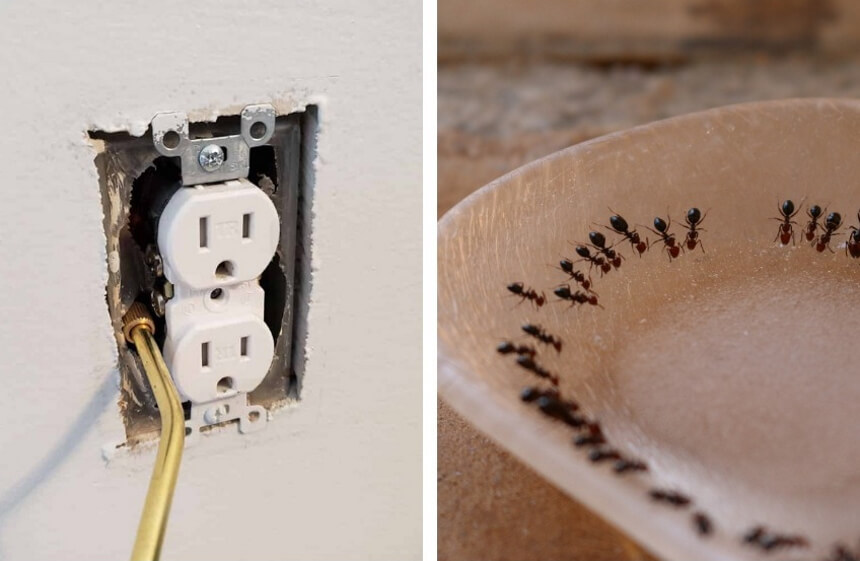
Ants in Electrical Outlets

Some ant species are attracted to the warmth and shelter provided by electrical outlets, appliances, and wiring. Tiny ants, like crazy ants or ghost ants, can crawl inside outlets, switch boxes, or even electronic devices, sometimes causing short circuits or electrical malfunctions.

Ants in electrical outlets pose serious fire hazards and can damage wiring. This problem requires immediate attention and specialized treatment approaches.

Step-by-step guide to eliminating ants in electrical outlets

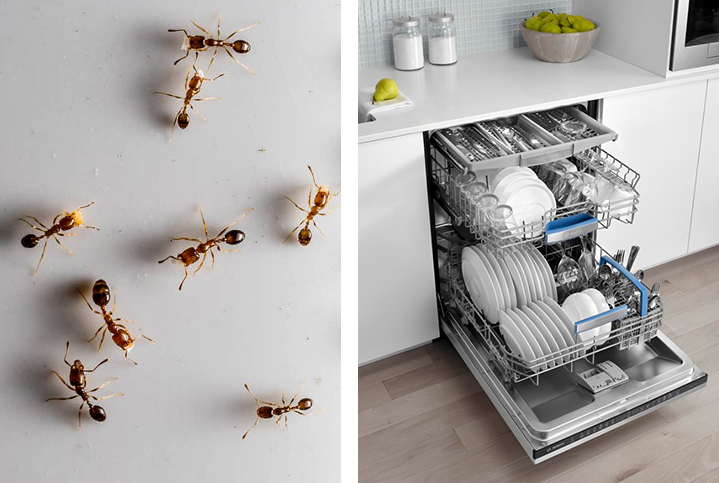
Ants in Dishwashers

Dishwashers can attract ants because they provide warmth, moisture, and leftover food particles. Small ant species, like sugar ants or pharaoh ants, are often drawn to these conditions and may enter the appliance through gaps around the door or drainage area. Regular cleaning and targeted treatments can resolve this issue.

Complete dishwasher ant elimination guide

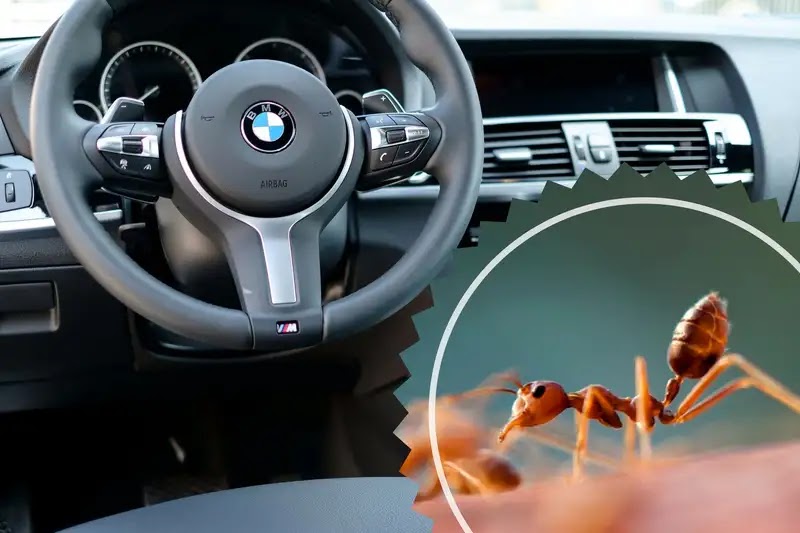
Ants in Your Car

Ants can sometimes invade cars, especially if food, crumbs, or sugary drinks have been left inside. Small species like sugar ants or crazy ants are common culprits, finding their way through vents, cracks, or door seals. Finding ants in your vehicle is frustrating and can happen when you park near colonies. Thorough cleaning combined with treatment will make your car ant-free.

How to get rid of ants in your car once and for all

Ants in Bedrooms

Ants in sleeping areas are particularly disturbing. They’re usually attracted by food crumbs, sweet drinks, or moisture from humidifiers. Small species like sugar ants or pharaoh ants are most common, often appearing near nightstands, under beds, or along window sills.

6 steps to eliminate bedroom ants

Ants on Carpets

Carpet fibers can trap food particles that attract ants. Proper vacuuming combined with targeted treatments will clear the infestation.

Expert advice for getting rid of carpet ants

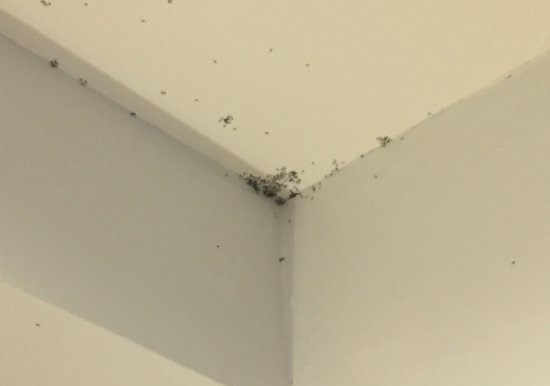
Ants on Ceilings

Seeing ants on your ceiling often indicates a nest in your attic or walls. This situation requires investigation of the source.

Understanding and controlling ceiling ants

Ants on the Ceiling

Seasonal Ant Control

Ant activity varies significantly throughout the year, and understanding seasonal patterns helps you stay ahead of infestations.

Winter Ant Control

While most people think ants disappear in winter, many species seek shelter indoors when temperatures drop. Some ants remain active year-round in heated homes, while others establish indoor colonies specifically for overwintering.

3 best ways to get rid of ants in winter

3 Best Ways to Get Rid of Ants in the Winter

Spring and Summer Activity

Spring and summer mark peak ant season. Warmer temperatures increase ant activity, colony growth, and swarming behavior. This is when flying ants emerge to establish new colonies, and outdoor species are most likely to invade homes seeking food and water.

Prevention Tips for Peak Season:

  • Seal entry points before warm weather arrives
  • Maintain regular outdoor treatments
  • Keep vegetation trimmed away from the home
  • Address moisture issues promptly

Fall Preparation

As temperatures cool, ants begin preparing for winter. Some species will attempt to move indoors, making fall an important time for preventive treatments and sealing entry points.

When Is It Time to Call a Professional?

Employing an exterminator could be helpful if everything else fails. However, you should also consider professional help in these situations:

Warning Signs You Need Professional Treatment:

  • Extensive carpenter ant damage to wooden structures
  • Multiple ant colonies or recurring infestations despite treatment
  • Large outdoor ant mounds near your foundation
  • Ants causing electrical problems or fire hazards
  • Infestation spreading rapidly throughout the home
  • Presence of species that require specialized treatment (like Pharaoh ants)
  • Structural concerns or hard-to-reach nesting areas

Choose a person who is dedicated to using the fewest hazardous products possible. Inform them if you have young children, animals, or other worries, like a respiratory illness.

Several exterminators claim to be eco-friendly, organic, or green in their titles. Before hiring an exterminator, if you are worried about chemicals, ask them what they usually use to treat ants.

Ant infestations are a serious concern for experts. Here are some actions an exterminator team might perform in your home to get rid of ants:

Actions Of A Professional Ant Exterminator

Examination

The initial step is to inspect your property thoroughly.  In this phase, they will identify the types of ants in your home, their origin, and the best strategy for eliminating them.  Additionally, they will find and remove any possible food sources.

Monitoring

The colony is usually considerably larger than you think, even if you only notice a few ants in your house or yard. To be sure they are aware of the location of the main colony and the origin of the ants, they will keep an eye on their behavior. The ants will be tracked to the nest, entry points in the building will be found, and all existing hives or nests will be identified to ensure complete ant eradication.

Control

Ultimately, they meticulously plant baits like the Terro liquid baits that the ants will eat and return to the hive. They may occasionally spray the ant trail leading back to the colony in targeted areas. The objective is to eradicate all ants completely and permanently by eliminating the queen and her progeny.

Professional treatments typically provide:

  • Complete colony elimination within 2-4 weeks
  • Warranty or guarantee periods (often 30-90 days)
  • Follow-up inspections and treatments
  • Identification of entry points and conducive conditions

Professional Pest Control

How to Prevent the Ant Problem

Preventing ant infestations from the onset is the best method to handle them. According to NC State Extension’s ant control guide, eliminating access to food, water, and shelter is the foundation of successful ant prevention. These easy strategies will aid in preventing ants from getting into your home.

Indoor Prevention

  • To get rid of ants in the kitchen, swiftly clean up any food stains and debris.
  • Ripe fruit should be kept in the fridge, while non-perishables such as sugar, biscuits, and other goods should be kept in sealed containers.
  • After each usage, dry the sink or tub, then cover the outlet with a cork.
  • Look for leaks underneath sinks and other devices, and solve any moisture issues immediately.
  • Clean pet dishes frequently, and any water or food spills right away.
  • Check indoor plant pots frequently for pest activity.
  • Get rid of ants in your bathroom with a mix of water and bleach in a bottle.
  • Seal cracks and crevices around windows, doors, pipes, and electrical outlets
  • Install door sweeps on exterior doors
  • Repair damaged screens on windows and vents
  • Store garbage in sealed containers and take it out regularly

Outdoor Prevention

  • Inspect your grass for any pest droppings. This has a good chance of decomposing unnoticed and luring pests like ants.
  • Take care of any garbage that may have spilled into your garden or fallen from your garbage cans.
  • If you own a garden or any vegetation that bears fruit, gather ripe produce or remove any that have fallen onto the ground.
  • Any outside trash containers should be cleaned and disinfected regularly to remove accumulation and stench.
  • Cut back branches extending toward your home’s roof or doors. They offer the ideal entryway for ants or other insects into your house.
  • Maintain a vegetation-free zone of at least 12 inches around your foundation
  • Remove wood piles, lumber, and debris from near the house
  • Fix exterior moisture problems, including clogged gutters and poor drainage
  • Trim grass and weeds regularly to eliminate ant nesting sites

Ant hill outdoor

Long-Term Prevention Strategy

Monthly Tasks:

  • Inspect foundation and entry points for new cracks
  • Check moisture levels in basements and crawl spaces
  • Clean outdoor areas where debris accumulates
  • Refresh natural deterrents like coffee grounds or diatomaceous earth barriers

Seasonal Tasks:

  • Spring: Apply preventive outdoor treatments before ant season peaks
  • Summer: Monitor for flying ants and new colonies
  • Fall: Seal entry points before ants seek winter shelter
  • Winter: Watch for indoor activity and address moisture issues

Treatment Comparison Table

Method Speed Cost Effectiveness Pet-Safe Duration
Bait Traps 3-14 days $$ High Caution needed 1-3 months
Sprays Immediate $ Medium Varies 1-2 weeks
Diatomaceous Earth Hours $ High Yes (when settled) Indefinite (if dry)
Natural Oils Immediate $ Medium Caution needed 2-3 days
Boiling Water Immediate Free Medium Yes One-time
Professional Treatment 2-4 weeks $$$$ Very High Yes (after drying) 3-12 months

FAQ

How to get rid of carpenter ants?

Evidently, the best way to get rid of carpenter ants is to have a professional exterminator come and spray your home. If you think you can deal with them on your own, then we recommend to use one the best carpenter ant killers which have proved effective in battle against this type of ants. Or you can try some do-it-yourself methods, like using boric acid or setting up ant traps.

How to get rid of fire ants?

There are a few things you can do to get rid of fire ants. You can use baits, traps, or chemicals to kill them. Here’s the list of the best fire ant killers you might want try.
You can also try to drown them out by flooding their nest. Whichever method you choose, make sure you are thorough and patient, as it may take a while to get rid of all the fire ants.

How to get rid of ants in electrical outlets?

Ants in electrical outlets are dangerous and require immediate attention. Never spray water or liquids directly into outlets. Instead, use gel baits near the outlet, diatomaceous earth around (not in) the outlet, or call a professional electrician and pest control specialist. Full guide to safely eliminating ants in electrical outlets.

How to get rid of ants in my car?

Start by thoroughly vacuuming and removing all food sources. Park away from ant colonies, use ant baits designed for enclosed spaces, and consider natural deterrents like peppermint oil on cotton balls placed under seats. Complete step-by-step car ant removal guide.

How to get rid of ants in my dishwasher?

Clean your dishwasher thoroughly, run an empty hot cycle with vinegar, check and clean the drain and filter, and use gel baits near (not inside) the dishwasher. Fix any leaks that might be attracting ants. Detailed dishwasher ant elimination steps.

How to get rid of ants in my bedroom?

Remove all food and drinks, vacuum thoroughly including under furniture, wash bedding, use bait traps or natural deterrents, and seal any entry points around windows and baseboards. 6-step bedroom ant elimination guide.

What are the safest ant control methods for homes with pets?

The safest methods include diatomaceous earth (once settled), physical barriers, sealing entry points, and pet-safe commercial products. Avoid essential oils around cats, and keep all baits out of pet reach. Complete guide to pet-safe ant killers.

How long do ant infestations last without treatment?

Without treatment, ant colonies can persist indefinitely and grow exponentially. A single colony can contain hundreds of thousands of ants and produce multiple satellite colonies. Learn about ant lifespans and colony growth.

Final Thoughts

While eliminating an ant colony can occasionally appear to be an endless cycle, acting and implementing preventative precautions is much simpler than you might imagine.

Ants can enter your house through tiny cracks in the foundation or even broken plumbing to scavenge for food and water they need to live through summer. Hence, you must learn how to get rid of ants.
No matter the eradication method you employ, your best hope for getting rid of the little insects will be to ensure your home is tightly sealed, clear of open water and food outlets, and that your garden is clear of anthills.

Remember: The key to successful ant control is a multi-pronged approach:

  1. Identify the ant species correctly
  2. Eliminate visible ants and trails
  3. Target the colony with baits
  4. Prevent future invasions through sanitation and exclusion
  5. Monitor regularly for new activity

Whether you’re dealing with carpenter ants damaging your home’s structure, fire ants threatening your family’s safety, or simply nuisance ants raiding your kitchen, this guide provides the strategies you need to reclaim your space. And if DIY methods aren’t working, don’t hesitate to call in professional help—some infestations require expert intervention.

For specific ant problems not covered here, explore our comprehensive library of ant control guides linked throughout this article.

Additional Resources:

Leave a comment

Your email address will not be published. Required fields are marked *

X